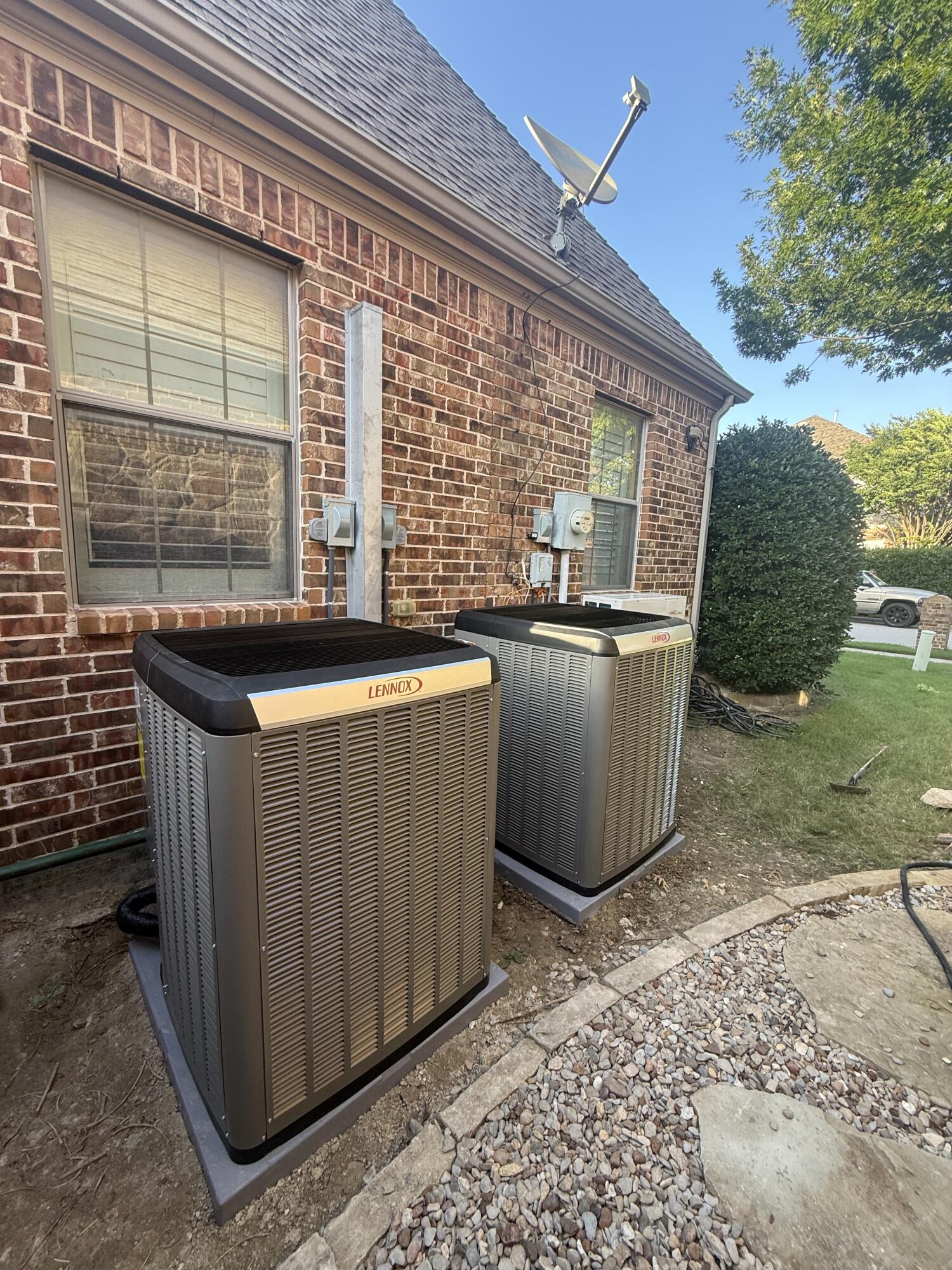
AC units freeze up when airflow across the evaporator coil is restricted or refrigerant pressure drops too low, causing condensation on the coil to turn to ice instead of draining away. The leading culprits behind what causes AC to freeze up are dirty air filters, blocked vents, and low refrigerant from a leak. Once ice builds up, the system stops cooling the home and often shuts down entirely.
According to ENERGY STAR, airflow problems alone can reduce a cooling system's efficiency by up to 15%. That drop in performance usually starts small (a slightly clogged filter, a vent nudged shut by a bookshelf) long before any ice ever appears on the coil.
Catching those early signs protects your comfort and your equipment, since a frozen coil left unaddressed can strain the compressor and turn a simple fix into a costly repair.
A frozen AC unit is actually one of the more common air conditioning problems homeowners run into once the temperature climbs. The coil ices over when warm air cannot move across it fast enough, or when refrigerant pressure drops too low for the system to work the way it should.
Several different parts of the system can be behind this, so it helps to look at each one on its own.
Airflow trouble is one of the most common reasons a coil turns into a frozen evaporator coil. A dirty air filter blocks air from moving through the system, so the coil ends up colder than it needs to be. Blocked vents, closed doors, and furniture sitting over registers can create that same problem, even in a well-built home.
Return air grilles need open space around them too, since a blocked return can starve the whole system of the air it needs to stay balanced.
A weak or failing blower fan often struggles to push enough warm air across the coil. When that airflow drops off, the coil cools faster than it warms back up, and ice starts to form along the edges.
A worn motor or a failing capacitor is usually behind this, and both parts tend to wear down gradually rather than fail all at once. That slow decline can make the problem easy to miss until the coil is already frozen.
Low refrigerant, usually from a small leak, is another frequent cause of a frozen coil. A faulty expansion valve can throw off refrigerant pressure too, which pulls the coil temperature below freezing.
Refrigerant is not something a system uses up over time, so a low level almost always points to a leak somewhere in the lines. Finding and sealing that leak is really the only way to fix the problem for good.
Dirt and grime on the coil or the outdoor unit slow down heat transfer quite a bit. A coil that cannot release heat properly tends to run colder than it should, and ice follows soon after.
The outdoor unit collects leaves, grass clippings, and dust over time, so it needs a rinse every so often to keep air moving through it freely.
Running the system when it's unusually cool outside can push it into overcooling. The unit was not built to operate that way, so the coil freezes instead of cooling the home evenly. This tends to show up most in spring and fall, when daytime temperatures still call for cooling but nights drop off sharply.
Good HVAC maintenance goes a long way toward keeping a coil from freezing in the first place. Most of the habits below take just a few minutes and can prevent AC issues well before they start.
A few simple steps, done on a regular basis, cover most of what a system needs to stay balanced. Homeowners who want to protect their system can start with the following:
Watching for early warning signs works just as well as any maintenance habit. Weak airflow, warm supply air, and frost on the refrigerant lines can all point to a coil that is starting to ice up.
Texas Ace Service - Heating & Air's Club Membership includes two seasonal inspections a year, which catch problems like this long before they turn into a full freeze. Staying ahead of small issues may save homeowners both time and money down the road, since a caught problem is nearly always cheaper than a broken system.
Air conditioner troubleshooting starts with turning the cooling mode off right away. Running the system while it's frozen only pushes it to work harder, and that can damage the compressor. Acting quickly at this stage tends to make the difference between a quick fix and a costly repair.
A few quick steps help the coil thaw safely:
If the coil freezes again soon after, something bigger is probably going on with the system. A repeat freeze is rarely random, so it's worth a closer look.
A coil that keeps freezing, even after the basics are handled, usually points to a deeper issue. Refrigerant leaks and worn blower parts are not something a homeowner can safely fix without training, and trying to handle them alone can actually make matters worse.
Texas Ace Service can schedule a diagnosis quickly once this happens, so the system is not sitting broken for long. Catching the real cause early tends to cost far less than waiting until the system stops working completely, and it usually means a shorter repair too.
Thawing usually takes between one and three hours once the system runs in fan-only mode. A heavier buildup of ice, or a coil that has been frozen for a day or two, can take closer to twenty-four hours to clear completely. Placing towels around the unit can help catch any water that drips while it melts.
Fan-only mode is actually the right setting during a thaw, so it's fine to leave it running. The fan moves room-temperature air across the coil, which speeds up melting without putting any extra strain on the compressor. Turning the whole system off completely works too, though thawing will take a bit longer without airflow moving across the coil.
Waiting a little while after the ice clears is a good idea before switching the cooling mode back on. Restarting too soon, before all the water has drained, can leave moisture sitting in the ductwork or around the unit.
Giving the system an hour or two of rest after the last of the ice melts is usually enough.
A frozen coil can absolutely damage the compressor if the system keeps running through it. Liquid refrigerant can end up flooding the compressor instead of gas, and that kind of damage is often expensive to repair. Turning the system off at the first sign of ice is really the simplest way to avoid that outcome.
Not every frozen coil points to a refrigerant leak, so it's worth checking the simple things first. Airflow problems cause freezing just as often, and clearing a filter or vent sometimes solves the issue completely. A technician can usually tell the difference within a few minutes of looking at the system.
A frozen indoor coil is usually hidden inside the air handler, so ice there is harder to spot right away. A frozen refrigerant line, on the other hand, is visible outside near the unit and often shows a clear layer of frost along the copper tubing.
Knowing what causes AC to freeze up puts homeowners in a strong position to catch problems before they escalate. Airflow restrictions and refrigerant issues sit behind nearly every frozen coil, and both respond well to routine attention.
Texas Ace Service - Heating & Air has served Dallas-Fort Worth homeowners since 2012, with technicians who answer calls 24/7 in person, not through an answering service. Our Club Membership includes two seasonal inspections a year, helping catch airflow and refrigerant problems before they turn into a frozen coil.
Get a free estimate today and get your cooling system checked before the next heat wave puts it to the test.

Texas Ace Service - Heating & Air
870 Dividend Street, Suite C
Midlothian, TX 76065
New Years Day
MLK Jr. Day
Memorial Day
Juneteenth
4th of July
Labor Day
Thanksgiving
Black Friday
Christmas Eve
Christmas Day
© 2026 Texas Ace Service. All Rights Reserved. Privacy Policy | Terms of Use